
This article contains affiliate links. We may earn a small commission on items purchased through this article, but that does not affect our editorial judgement.
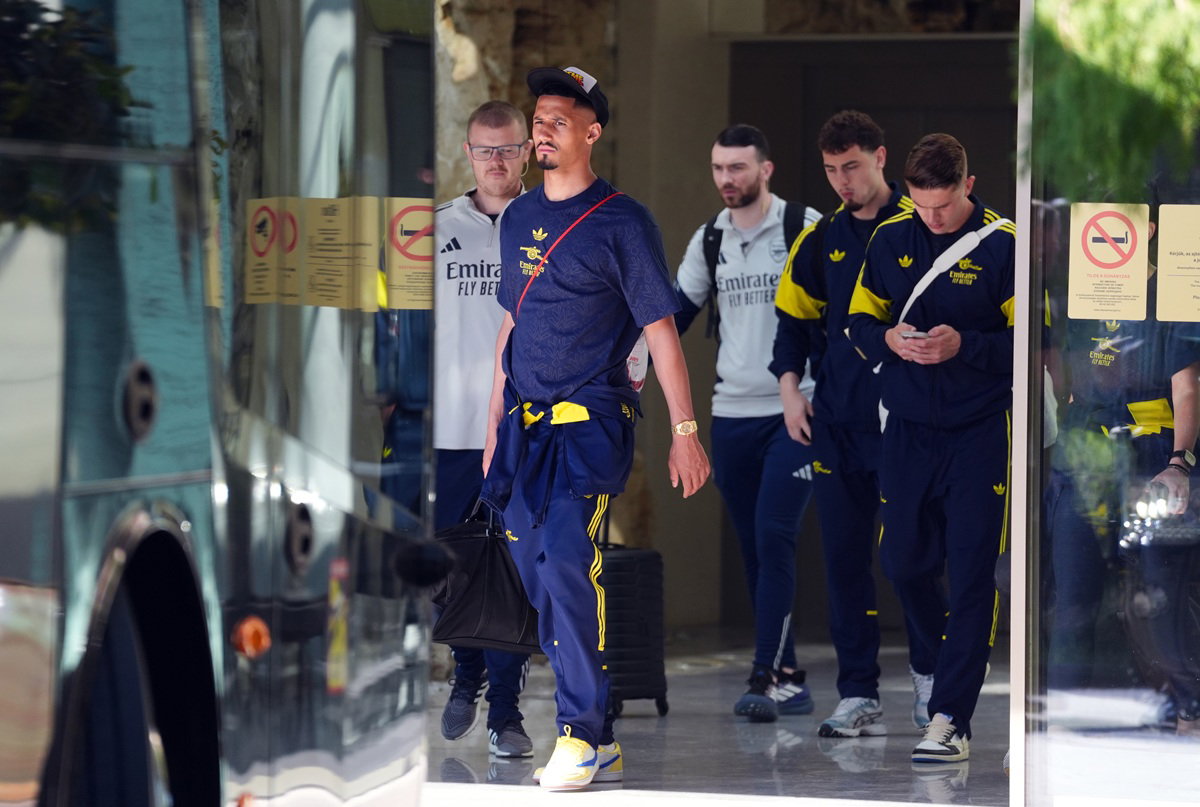
Arsenal centre-back William Saliba is unlikely to make his comeback before December, according to RMC Sport reporter Fabrice Hawkins.
The journalist is very reliable when it comes to stories involving French players, and he posted an injury update on X about Saliba yesterday:
“William Saliba could make his return to competition in December if all goes well. Arsenal’s defender is currently continuing his recovery following his back fracture.”
The initial estimates were that Saliba would be out for 5 months, and it seems that timeframe was accurate.
Saliba is still resting up
There have been no pictures of the 25-year-old in the gym or doing any other form of rehabilitation, which already indicated that his return was pretty far off.
Manager Mikel Arteta has been keen to emphasise that Saliba needed time to recuperate to ensure that the back injury healed properly. Coming back too early would have risked a setback and an even lengthier layoff.
Manchester United’s Matthijs de Ligt suffered a back injury in late November last year, and he has only started training again in the last few weeks, so Arsenal’s medical team are wise to be careful with Saliba.
Get a brand-new Arsenal 2026/27 third shirt from Fanatics
How many more Arsenal matches could he miss?
For argument’s sake, we will assume that Saliba will be back available for the first fixture in December, and that would mean he will be sidelined for another 12 games in total.
There are seven league matches against Leeds United, Nottingham Forest, Everton, Liverpool, Hull City, Newcastle United and Manchester City during that period.
Saliba will be missing for the Champions League group games against Lille, Bayern Munich, Slavia Prague and Borussia Dortmund as well. The Carabao Cup fourth-round tie against Fleetwood Town is also scheduled for October 27th.
PakarPBN
A Private Blog Network (PBN) is a collection of websites that are controlled by a single individual or organization and used primarily to build backlinks to a “money site” in order to influence its ranking in search engines such as Google. The core idea behind a PBN is based on the importance of backlinks in Google’s ranking algorithm. Since Google views backlinks as signals of authority and trust, some website owners attempt to artificially create these signals through a controlled network of sites.
In a typical PBN setup, the owner acquires expired or aged domains that already have existing authority, backlinks, and history. These domains are rebuilt with new content and hosted separately, often using different IP addresses, hosting providers, themes, and ownership details to make them appear unrelated. Within the content published on these sites, links are strategically placed that point to the main website the owner wants to rank higher. By doing this, the owner attempts to pass link equity (also known as “link juice”) from the PBN sites to the target website.
The purpose of a PBN is to give the impression that the target website is naturally earning links from multiple independent sources. If done effectively, this can temporarily improve keyword rankings, increase organic visibility, and drive more traffic from search results.